28 FEB 2026 · AI Skills
TechTrack 2026: Connecting Students to Industry Through Experience and Access
By DEMALOGUE, Zainab Al-Zadjali
Presented with ISACA Toronto Chapter and partner schools, TechTrack 2026 brought GTA students into industry conversations on cyber, cloud, AI, and early-career navigation.
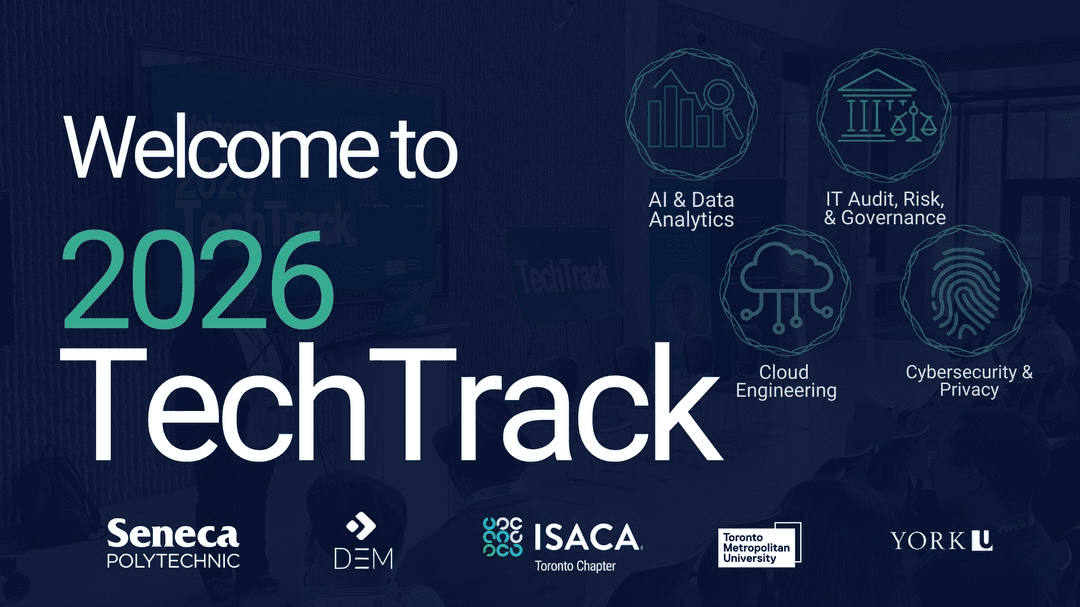
Over the past four years, TechTrack has been one of DEMA's core events dedicated to curating a space for students to connect with industry professionals and explore technology-focused career pathways. Presented by ISACA Toronto Chapter and hosted by the Digital Enterprise Management Association (DEMA) in collaboration with Seneca Polytechnic, Toronto Metropolitan University, and York University, TechTrack 2026 has grown from a small initiative into one of DEMA's largest programs, bringing together students from across the Greater Toronto Area to engage with industry perspectives, challenge entry-level stigma, and participate in cross-institutional conversations.
DEMA's Vision for TechTrack
In a pre-event interview with members of DEMA's external events team, Vaibhav Kaushal, External Director, described TechTrack as an extension of DEMA's broader purpose.
DEMA's mission is to bridge the gap between business and technology, and TechTrack reflects that in practice.
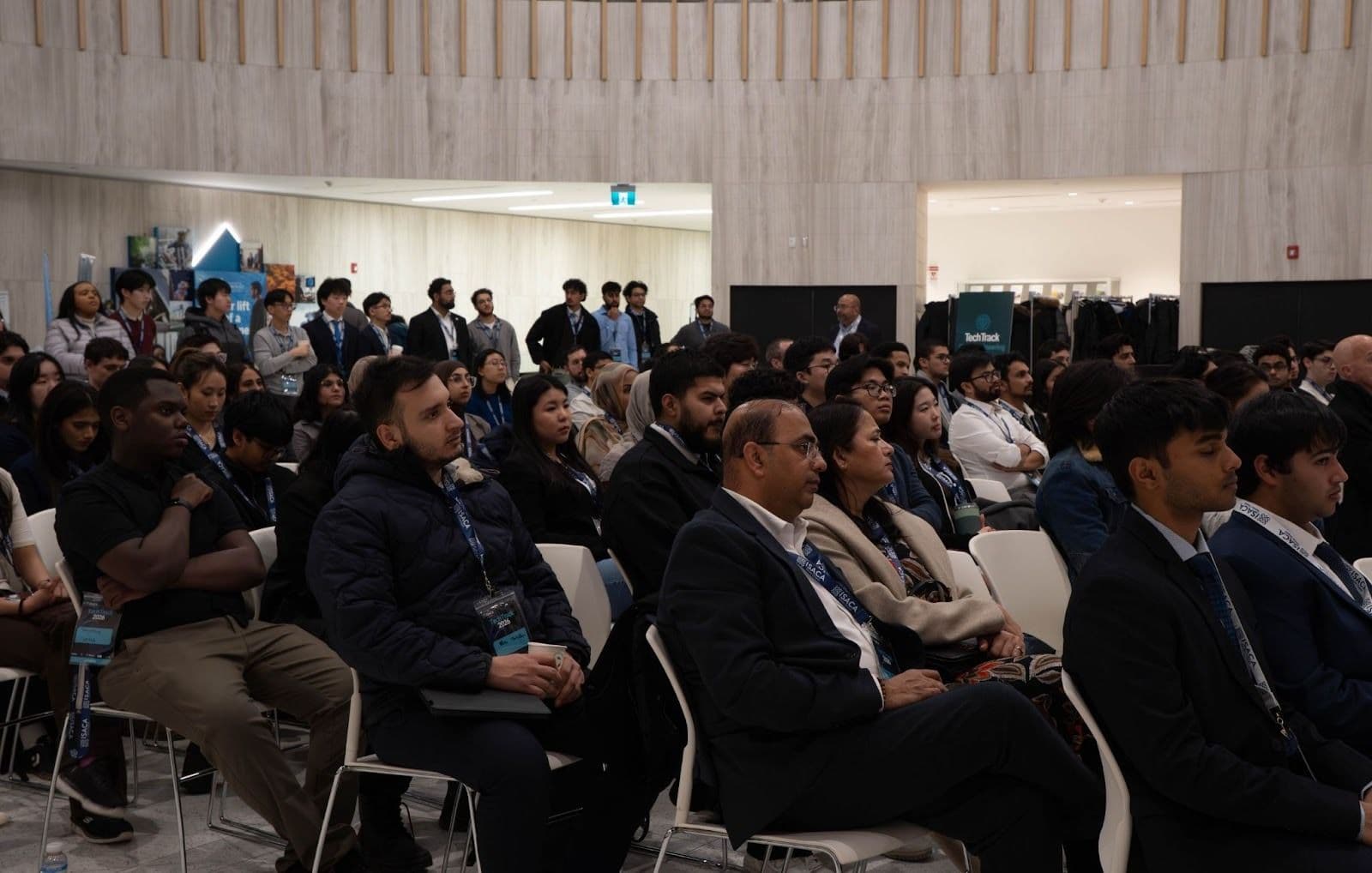
The event focuses on areas where business and technology intersect, including cybersecurity, cloud engineering, AI and data analytics, IT auditing and governance. It intentionally brings together students from different academic environments to contribute to shared discussions shaped by varied curricula. Through conversations with professionals from a range of industries, students were exposed to the realities of these fields, from early uncertainty and preparation to long-term persistence.
Industry Perspective: ISACA Toronto Chapter
The event opened with remarks from the ISACA Toronto Chapter, delivered by Belal Raifai, Academic Relations Director and Senior Manager at PwC Canada. He spoke about how ISACA's focus has evolved alongside the technology landscape, expanding beyond traditional IT audit into areas such as cloud computing, data analysis, AI, and other emerging fields.
ISACA today offers far more than IT auditing or governance. It covers cloud computing, data analysis, AI, and other emerging technologies.
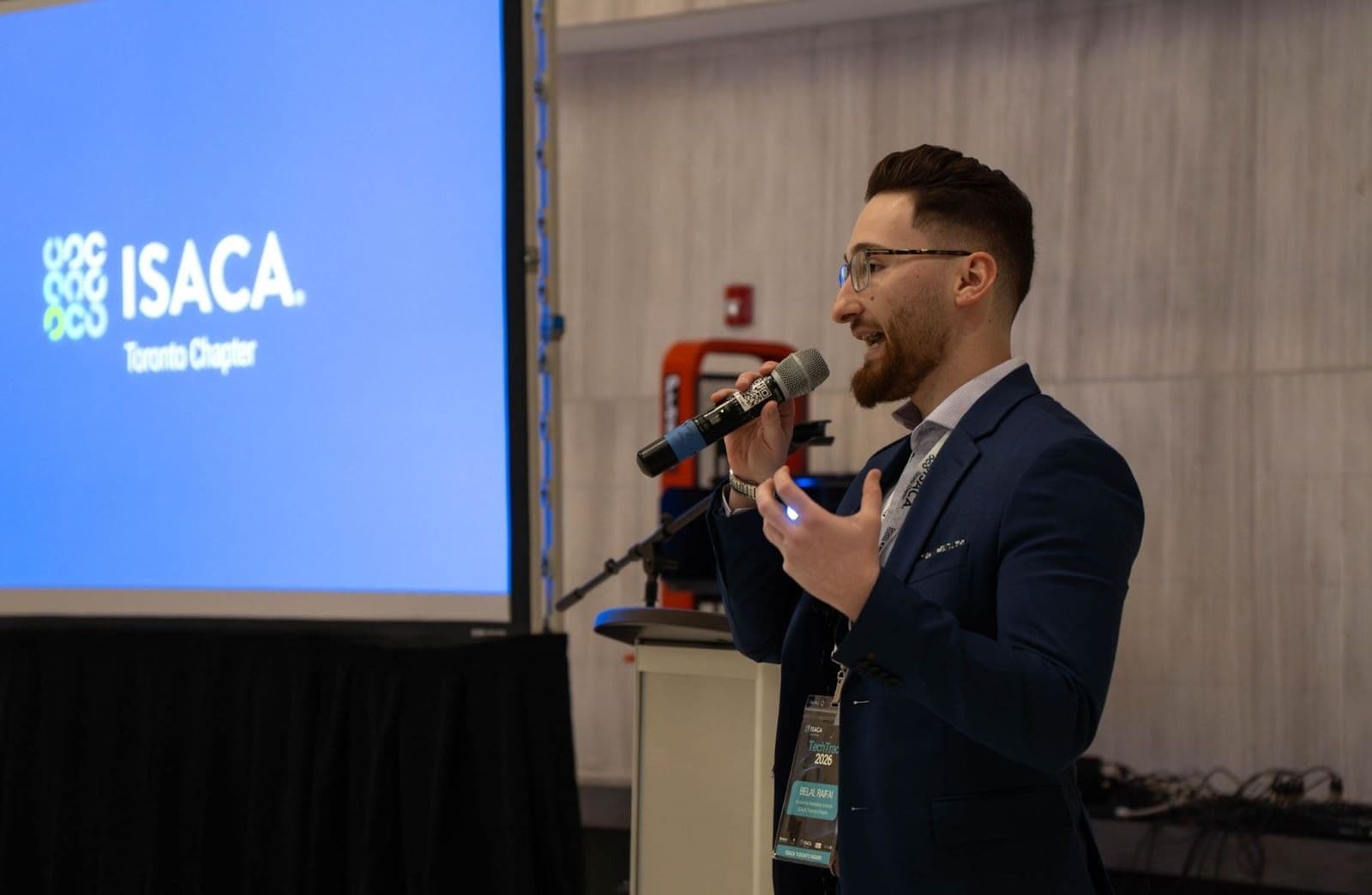
As the largest ISACA chapter in Canada, the Toronto Chapter highlighted the role industry organizations can play in helping students bridge academic learning with real-world expectations through events, certifications, and student-focused initiatives.
Panel Discussion: Experience and Early Career Navigation
Personal experiences, early career uncertainty, and the realities of entering a competitive job market shaped the panel discussion. Panelists reflected on navigating internships, developing skills beyond the classroom, and learning through trial and error.
Murilo Pereira, who works in tech and cyber risk at Loblaw Companies Limited and previously held roles in cyber risk at PwC, spoke candidly about navigating early internships and limited choice.
I wouldn't say I had the luxury of choice all the time. Even early on, my first internship wasn't my first choice. It was just the only one I could get. Sometimes you have to take whatever's available, but make the most out of it, and think critically - how does this apply to my career? With a little bit more experience under your belt, that luxury of choice begins to open up. When your back is against the wall, that's when you begin to really hone in and do whatever's possible. You just have to go out there and do everything you can.
Building on this perspective, Kensho Ando Heng, Head of AI at Coaching and Sales Institute, emphasized how adaptability and self-directed learning can reshape early career growth, particularly as new technologies change how skills are developed.
We are in a super learning industry now where AI can help teach anything and everything. Use it to your advantage. I've learned more in the past two years than I ever have. I hate math, I've learned math. I hate coding, I learned coding. All of this without a single human teaching.
Taken together, the panel suggested that early career progress is shaped less by perfect choices and more by how students respond to constraints, adapt their learning, and take ownership of their growth.
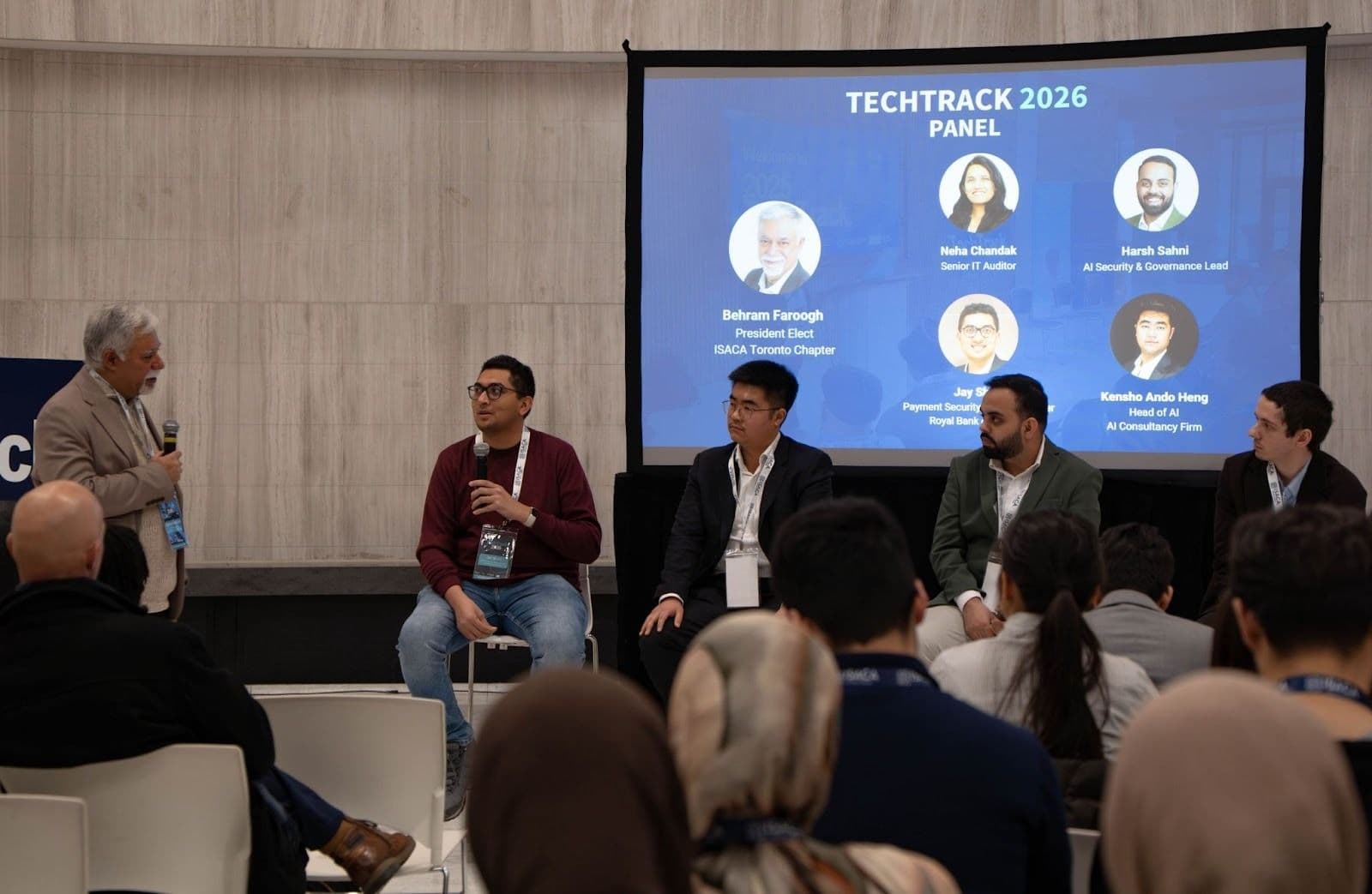
During the open discussion, students raised questions about navigating uncertainty, particularly when opportunities feel limited. In response, Murilo emphasized the importance of reflection and adaptability.
Sometimes you have to take what's available, but the important part is thinking critically about how it applies to your career and how you can build from it.
From Discussion to Connection
Following the panel, the event transitioned into a networking segment where students approached industry professionals and organizers. In this more informal setting, attendees were able to ask specific questions, receive personalized advice, and reflect on how the panel's themes applied to their own academic and career paths.
Certifications and Financial Help
In a post-panel conversation, Belal Raifai expanded on how the ISACA Toronto Chapter works to make technology and cybersecurity more accessible to students, particularly given the perception that these fields are not entry-level friendly.
We offer events tailored for students, including networking events, panels, and case competitions, often in collaboration with academic institutions.
He also addressed concerns around the cost of certifications and professional development.
If a student faces financial barriers, they can reach out to us directly and we can discuss how to make certifications more accessible.
We're always looking for ways to collaborate and give back, especially to students and clubs that contribute to the community.
Belal noted that students can contact the chapter through ISACA's general email, connect through the ISACA Toronto Chapter website, or reach out directly via LinkedIn.
For first-year attendees, the impact of TechTrack showed up in practical takeaways. "Beyond technical knowledge, connections are one of the most important things you need to get internships," shared a first-year student attendee. Another student emphasized that clear communication and understanding the people you work with are just as important as technical skills.
Looking Ahead
TechTrack 2026 concluded with an emphasis on continuity rather than closure. Through collaboration between DEMA and ISACA Toronto Chapter, the event created space for students to engage with industry perspectives, ask questions, and build connections across disciplines and institutions.
As TechTrack continues to grow, its purpose remains consistent: to support students navigating technology-focused careers through shared knowledge, accessible resources, and community-driven engagement.
Acknowledgements & Resources
TechTrack 2026 was made possible through collaboration between DEMA and ISACA Toronto Chapter, with support from Seneca Polytechnic, Toronto Metropolitan University, and York University.
Students who attended TechTrack 2026 are also eligible to redeem an ISACA Toronto Chapter student membership, with discounted access to future events, professional development opportunities, and student-focused resources.
Source: DEMALOGUE