28 FEB 2026 · Artificial Intelligence
Which Jobs AI is Actually Automating (and which it isn't)
By DEMALOGUE, Zainab Al-Zadjali
The real story is not mass unemployment. It is which tasks AI already handles, which roles still need human judgment, and how work is being reshaped.
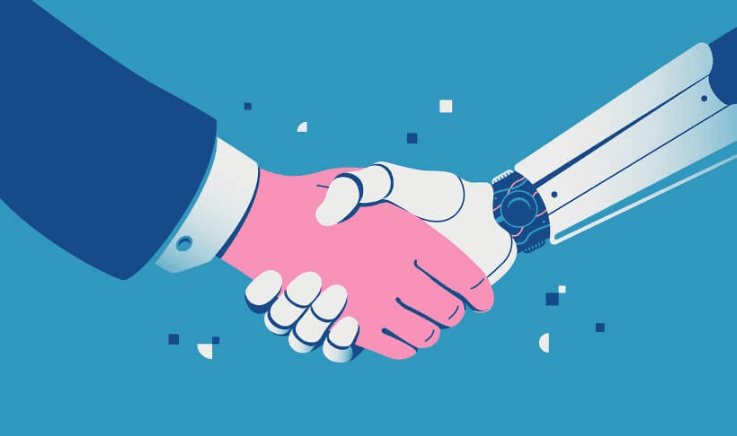
The Reality Check
Many headlines invoke fear with the same warning: "Artificial Intelligence Is Taking Your Job."
In most offices today, you will find humans still working, just differently. The real story is not mass unemployment; it is about which tasks are being automated and which tasks humans can better focus on. AI is not simply stealing jobs; it is making some tasks easier so people can spend more time on work that provides value.
Following the boom of AI development, there is now clearer data on what jobs are actually being automated.
Jobs AI Has Already Automated
The wave of automation has already begun. Jobs based on pattern recognition, simple decision-making, and repetitive tasks are vulnerable to AI displacement (Romford, 2025). Bookkeepers now compete with accounting software, retail cashiers are being replaced by self-checkout kiosks, and warehouse workers compete against robotic arms and autonomous forklifts that handle inventory with greater precision (Romford, 2025). Tasks that are heavily rules-based or administrative are increasingly handled by AI systems embedded into everyday tools, leading to fewer entry-level roles and higher expectations for human judgment and oversight.
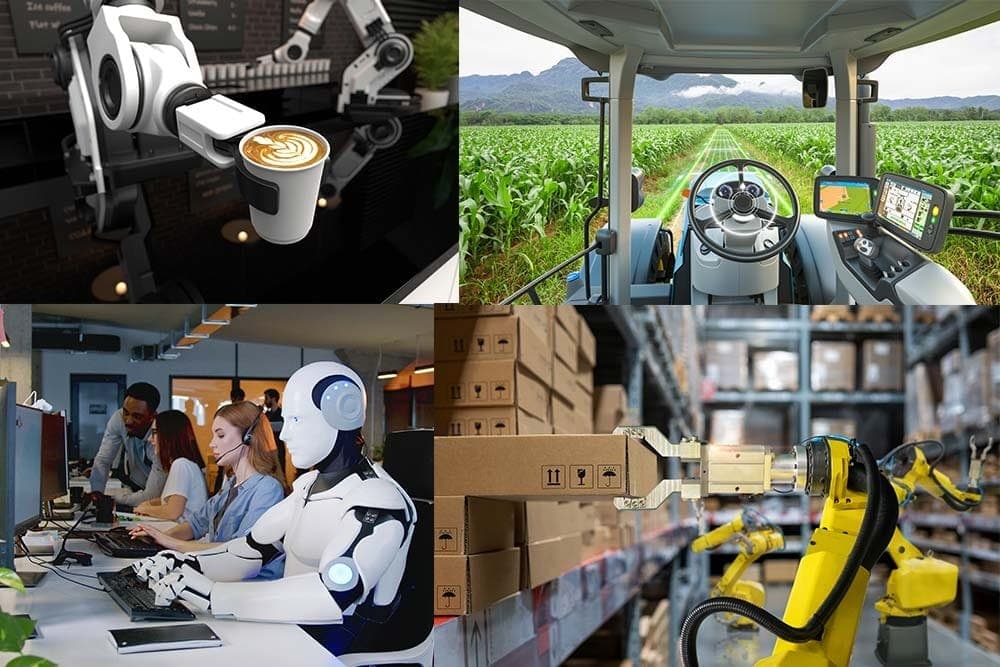
The reasons are straightforward: companies use AI to cut costs, meet speed demands, and allow for constant service. AI can complete these tasks with more accuracy, efficiency, and speed (Romford, 2025). The automation wave also extends beyond the obvious targets. Drivers are seeing roles change as autonomous vehicles advance, with Uber collaborating with companies like Waymo and Aurora. Financial traders are being outpaced by AI systems that predict trends faster, and travel advisors have been displaced by AI-powered platforms that personalize recommendations from search history (Urwin, 2026).
The scale can feel overwhelming: generative AI is predicted to automate 57 percent of work hours in the United States (Yee et al., n.d.). What these jobs share is a performance advantage: consistency, lower hiring costs while maintaining accuracy, and computer vision that lets robots navigate complex environments (Urwin, 2026).
Jobs AI Can't Touch (And What They Have In Common)
While AI has made significant strides, certain professions remain firmly in human hands. Technology roles like data scientists, cybersecurity engineers, machine learning engineers, and AI operations managers continue to thrive. Outside technology, mental health specialists, teachers and professors, registered nurses, paramedics, civil engineers, project managers, surgeons, artists, and musicians share something AI cannot replicate: critical thinking, personal judgment, and emotional connection (Romford, 2025).
These positions demand context, trust, ethics, and human connection - areas AI still struggles with. Roles requiring problem-solving, leadership, and relationship management continue to matter in healthcare, education, and the creative arts (Romford, 2025).
The Real Pattern: Tasks vs. Jobs
The conversation around AI and employment has been dominated by fear of mass unemployment, but the reality is more nuanced. AI may have replaced work, but not always the workers (Romford, 2025). Many roles still exist; they just look different. Jobs that once required full-time staff now often need fewer people overseeing AI-powered workflows. One customer support agent may supervise multiple AI assistants instead of handling every request manually.
Employment declines are concentrated where AI is more likely to automate rather than augment human labour (Urwin, 2026). That mirrors historical shifts like the Industrial Revolution, when human work was not eliminated so much as changed, and many new jobs were created.

The World Economic Forum projects a net increase of 170 million new jobs by 2030 (Urwin, 2026), many created by AI's expansion. New roles like AI ethics specialist, AI literacy trainer, health technology implementation specialist, and prompt engineer are already emerging. AI is not solely a job eliminator, but a job transformer (Romford, 2025).
To be successful, develop skills AI cannot replicate: creativity, empathy, strategic thinking, and the ability to navigate complex human situations. Ray Dalio argues that the economy depends on the balance between AI's ability and human potential; to influence the future, prepare now (Kelly, 2025). The future of work is not humans versus machines. It is humans working smarter with machines.
References
Yee, L., Madgavkar, A., Smit, S., Krivkovich, A., Chui, M., Jesus Ramirez, M., & Castresana, D. (n.d.). Agents, Robots, and US: Skill partnerships in the age of AI. McKinsey Global Institute. https://www.mckinsey.com/mgi/our-research/agents-robots-and-us-skill-partnerships-in-the-age-of-ai
Source: DEMALOGUE